
Self-Advocacy Toolkit



What Is Self-Advocacy?
Self-advocacy is the ability to speak up for yourself, express your needs, and make informed decisions about your life. It means knowing your rights, understanding your options, and confidently communicating to ensure your needs are met.
For people with disabilities, self-advocacy involves:
- Recognizing your rights and responsibilities.
- Expressing your needs for accommodations and support.
- Seeking information and resources to make informed choices.
- Speaking up in various settings, such as at work, school, or in healthcare.
What Is the Difference Between Advocacy and Self-Advocacy?
| Advocacy | Self-Advocacy |
|---|---|
| Advocates can be your family, professionals, organizations that speak on behalf of someone or a group. | You take the lead in speaking up for yourself. |
| It often involves systemic change for example policies. | You focus on your personal needs, rights and goals. |
| It can be done by disability rights organizations, support groups, or legal advocates. | You learn, plan, and take action to ensure your needs are met. |
| It helps people who may not be able to advocate for themselves. | You show independence and confidence in decision-making. |
Self-Advocacy Skills
Speaking up for yourself is important, but doing it effectively takes practice. Self-advocacy is a skill you develop over time, and it’s natural to face challenges along the way. If you ever feel discouraged, remind yourself that the effort you put in now will help you in the future.
Here are self-advocacy skills that will help you:
- Be confident – Believe in yourself and speak up with confidence. Your voice and experiences matter.
- Recognize areas for growth – Understanding both your strengths and challenges will help you advocate for yourself more effectively. Acknowledge where you need support, but also focus on what you do well.
- Set clear goals – Define what you want to achieve and outline your goals using the worksheet below. Having a clear direction will help you feel more prepared and self-assured.
- Ask for accommodations when needed – Advocating for yourself includes knowing when and how to ask for accommodations. If you need support, don’t hesitate to request it – it’s your right.
Let’s take a look at the self-advocacy process.
Self-Advocacy Process
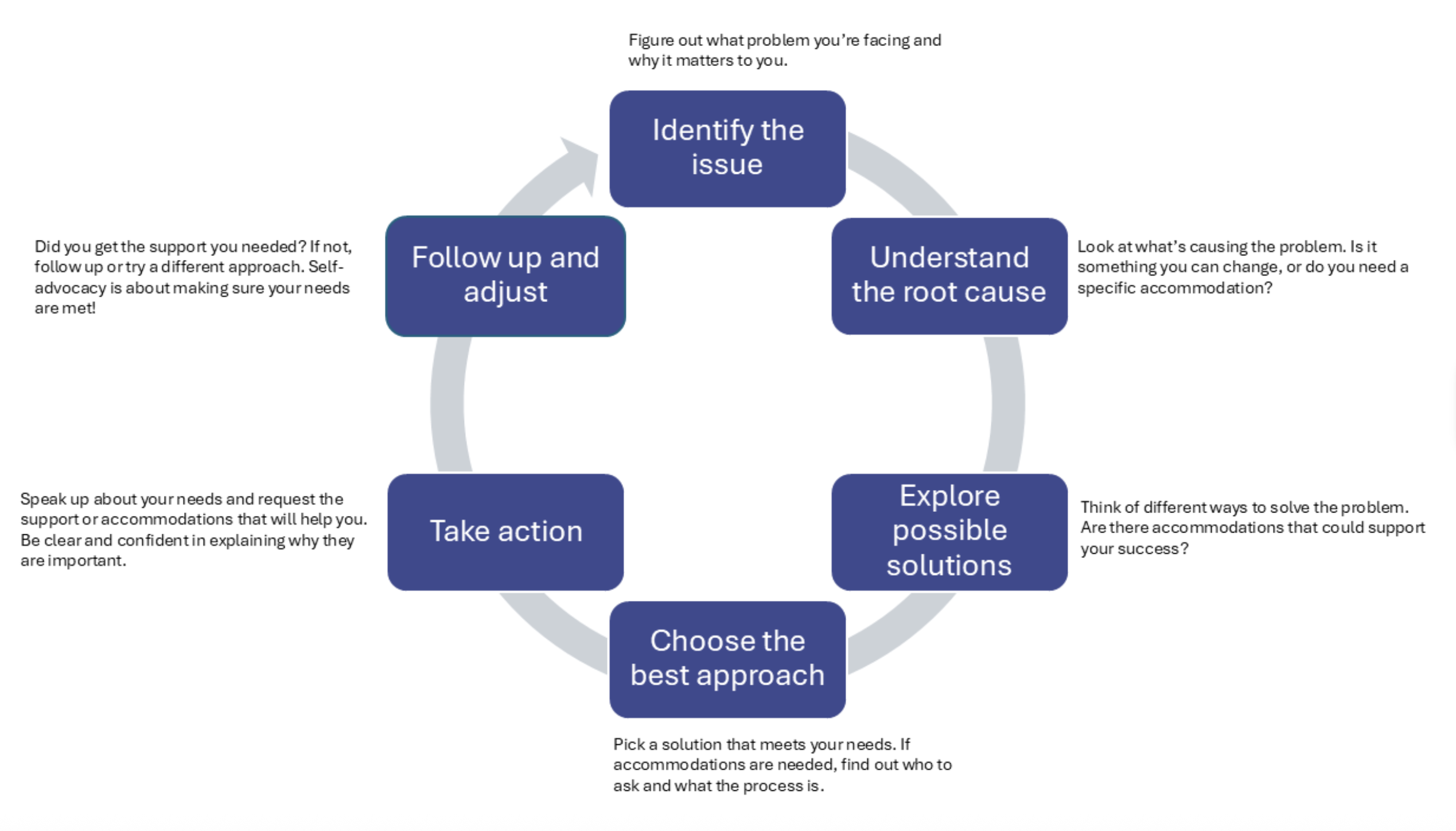
Step 1: Identify the Issue
- What is the challenge you are facing?
- How does it impact your daily life or work?
Step 2: Understand the Root Cause
- Use the 5-Whys Technique to dig deeper into why the issue exists.
- Why is this problem happening?
- What are the barriers preventing a solution?
Step 3: Explore Possible Solutions
- Consider different ways to address the issue. Solutions may include:
- Requesting accommodations such as workplace adjustments, assistive devices, or flexible schedules.
- Seeking support from advocacy organizations.
- Engaging in discussions with decision-makers.
Step 4: Choose the Best Approach
- What solution will have the greatest impact?
- What is the easiest solution to implement?
- Who do you need to talk to?
Step 5: Take Action
- Write a request or talk to the right person, for example, your manager.
- Clearly explain your needs and the solution you are requesting.
- Use advocacy resources or legal protections when needed.
Step 6: Follow Up and Adjust
- Check if the solution is working.
- If the issue is unresolved, seek alternative solutions.
- Document your requests and responses for future reference.
Know Your Strengths and Goals Through This Worksheet
This worksheet will help you stand up for yourself, understand your needs, and take steps to get the support you deserve. It guides you through identifying your strengths, setting goals, communicating clearly, and handling different self-advocacy situations.
Worksheet 1: Identifying My Strengths
Take a few minutes to reflect on what you do well. Knowing your strengths can help you communicate your needs more effectively.
- What tasks or activities am I good at?
- What strategies or tools help me succeed?
- What have others said they appreciate about my skills or abilities?
- How do I best learn and communicate?
Worksheet 2: Identifying My Goals
Use this worksheet to define what you want to achieve through self-advocacy. Ask the following questions:
- What specific support or accommodation do I need?
- Why do I need this support? How does it help me?
- Who do I need to talk to in order to request this?
- What concerns might they have, and how can I address them?
- What will I do if my request is denied?
Tips for Effective Communication
Self-advocacy is about knowing your rights, speaking up, and taking action to get the support you need. It’s okay if it takes time to feel comfortable, every step you take builds your confidence and independence.
Know Your Rights and Available Support
- Learn about laws that protect your rights, such as the Nunavut Human Rights Act, the Accessible Canada Act, and the UN Convention on the Rights of Persons with Disabilities.
- Find out about policies in workplaces and public services that provide accommodations.
- Keep important documents, like doctor’s notes or support letters, to help explain your needs.
Understand and Explain What You Need
- Think about what supports or changes would help you succeed, for example, assistive devices or flexible work schedules.
- Be clear and specific when you ask for accommodations.
- Speak calmly and confidently when talking about your needs.
- Practice how to explain your needs in different situations so you feel more comfortable.
Ask for Accommodations
- Ask for accommodations as early as possible so there is enough time to make changes.
- Write down your request so there is a record of it.
- Use a template or checklist to make sure you don’t forget anything.
- Be open to discussing solutions with your school, employer, or service provider.
Stay Confident and Keep Trying
- If your request is denied, ask why and see if there are other options.
- Keep a record of emails, conversations, and decisions so you have proof of what was discussed.
- If you are not getting the help you need, reach out to disability organizations or legal support for advice.
Build a Support System
- Connect with disability organizations that can help with advocacy.
- Find people who have experience asking for accommodations and learn from them.
- Look for extra support in workplaces or schools, like disability networks and student accessibility services.